
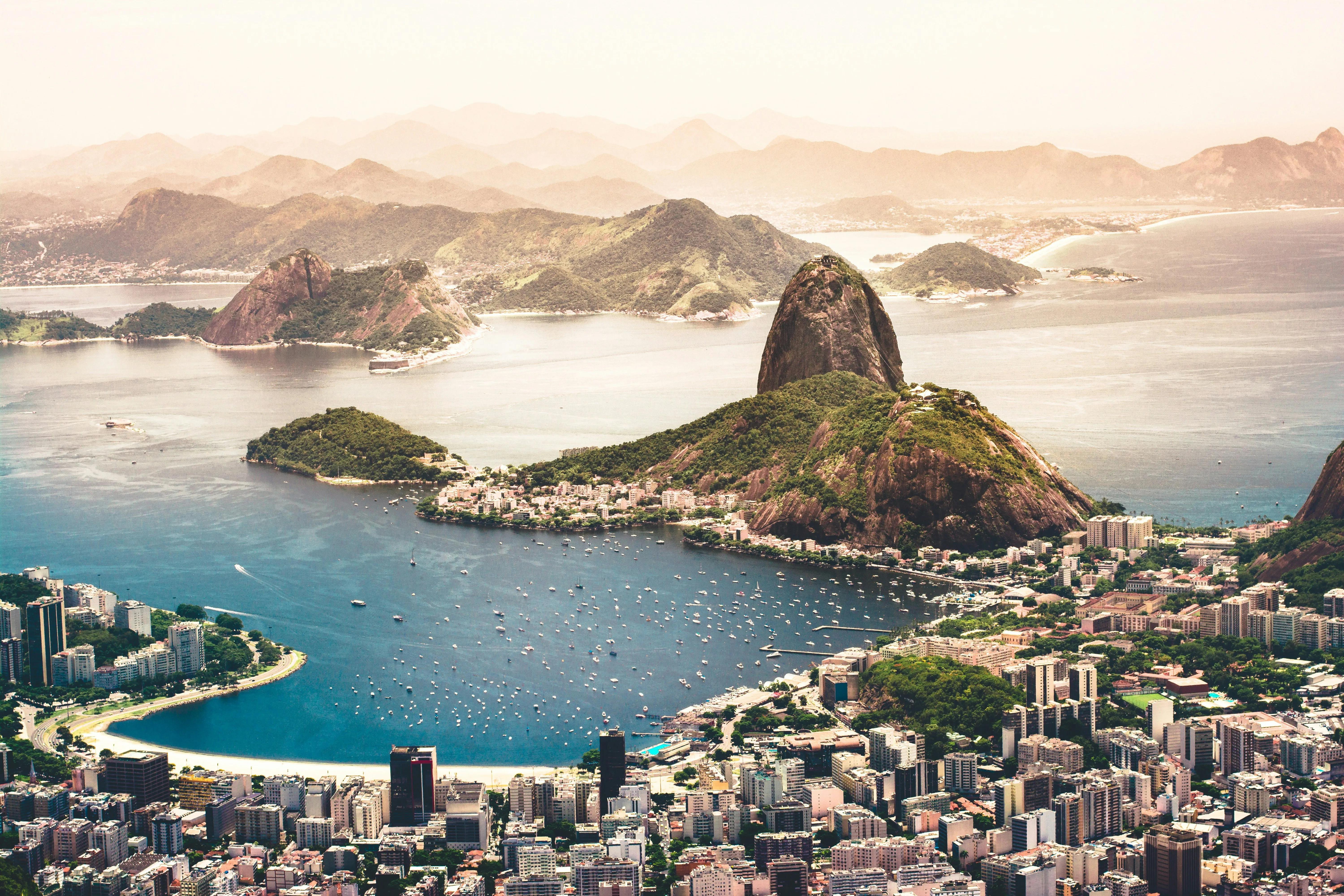
Brazil
South America's largest nation offers Americans an entirely different rhythm of life: a continent-sized country of rainforest, coastline, and cities that never quite stop moving. Brazil's 2023 dual-citizenship reform means naturalizing no longer costs you your U.S. passport, and a growing population of researchers, artists, and remote professionals are building lives in São Paulo's business towers, Rio's beachfront neighborhoods, and the tech and university hubs sprouting across the south. For committed newcomers who put in the years of residency, Brazil rewards patience with genuinely full belonging: a Brazilian passport carries visa-free access across South America, the EU's Schengen Area, and much of Asia.
Daily life here runs on warmth and improvisation, from beachside pickup football games to the constant hum of churrasco grills at weekend gatherings. Portuguese is non-negotiable for the long run, but the payoff is a culture that treats newcomers who make the effort as family rather than guests. Whether you're drawn by academic or artistic recognition, a remote-work escape to Florianópolis, or simply the appeal of a lower cost of living without giving up cosmopolitan amenities, Brazil offers a real, if patient, path to becoming a citizen of the country.
Ancestry
Citizenship by descent lets you inherit citizenship through a parent, grandparent, or (in some countries) an even earlier ancestor, without first establishing residency yourself.
Explore citizenship by Ancestry in other countries.Brazil's Status
Golden Visas
A Golden Visa is a program where an investment in real estate, a government fund, a business, or a direct donation earns you a residency permit, the right to live in, and often travel visa-free around, the country. Citizenship isn't automatic, but can follow after meeting certain time and residency requirements.
Learn how Golden Visas work in other countries.Brazil's Status
Digital Nomad Visas
Digital nomad visas are government programs that let you live abroad while continuing your remote job back home, typically for six months to a few years, in exchange for proof of remote income and health insurance.
See which countries have a dedicated Digital Nomad Visa.Brazil's Status
Other Options
For those without Brazilian ancestry or investment capital, naturalization after a set period of legal permanent residency is the standard route to citizenship, and Brazil offers a significantly accelerated track for researchers, academics, and recognized artists.
Brazil's Path to Citizenship
Establish your path to Brazil.
Life as a Brazilian National
Life in Brazil as a citizen comes with a markedly lower cost of living than the United States, particularly outside the most expensive neighborhoods of Rio de Janeiro and São Paulo. Housing, groceries, and everyday services can run 40 to 60% cheaper than comparable U.S. cities, and a comfortable apartment in a mid-sized city like Florianópolis or Curitiba is well within reach on a modest income. Public transportation in the major metros is extensive, though many residents in smaller cities and coastal towns rely on cars or scooters to get around.
Healthcare is delivered through a dual system: the Sistema Único de Saúde (SUS), a free public network available to everyone including permanent residents and naturalized citizens, and a robust private insurance market favored by professionals and expats for shorter wait times and English-speaking doctors in the larger cities. Private plans remain a fraction of U.S. premiums. Work culture leans relationship-first: business moves at a slower, more personal pace than in the U.S., with long lunches and an emphasis on trust built face-to-face before deals close.
Brazil's sheer geographic range means citizens can choose their climate: the tropical energy of Rio de Janeiro, the corporate skyline and cultural density of São Paulo, or the laid-back, island-dotted lifestyle of Florianópolis, increasingly popular with remote workers and retirees alike. Inland cities like Belo Horizonte and Curitiba offer milder weather and a lower cost of living still, while the south's four distinct seasons appeal to those missing a proper winter. Across all of it, Brazilian social life centers on family, food, and an outdoor-first culture that makes the years of residency required for citizenship feel less like a wait and more like a life already underway.