
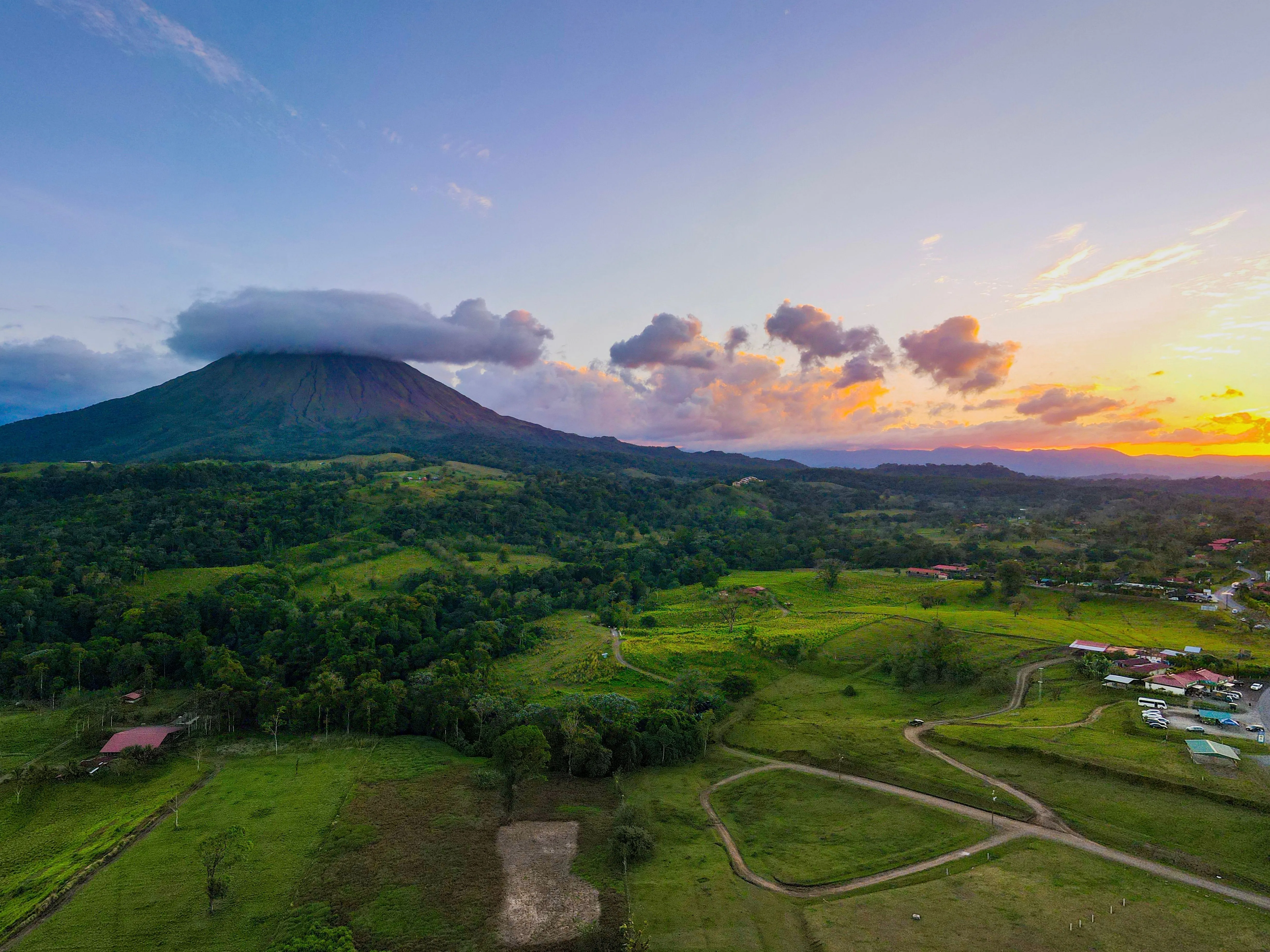
Costa Rica
Costa Rica built its identity around "pura vida," a phrase that captures far more than a greeting: a national ease with slowing down, valuing family and nature over hustle, and trusting that things work out. The country abolished its army in 1948 and redirected that spending toward education and conservation, and today a quarter of its land is protected, home to roughly five percent of the world's biodiversity packed into a nation the size of West Virginia. Add the longest-running democracy in Latin America, a stability that has earned it the nickname "the Switzerland of Central America," and you have a country that offers Americans not just scenery but genuine, durable calm.
A long-established expat community, from Escazu's suburbs to the beach towns of the Nicoya Peninsula, means arriving doesn't mean starting over socially. For Americans exploring an investment residency or a longer path to naturalization, Costa Rica pairs a USD-anchored economy and English-friendly healthcare and legal sectors with year-round warmth, whether that's Central Valley spring-like mornings, Guanacaste's dry coastal heat, or the humid, laid-back rhythm of the Caribbean side. It's a place built for people who want their relocation to feel like an upgrade in quality of life, not a compromise.
Ancestry
Citizenship by descent lets you inherit citizenship through a parent, grandparent, or (in some countries) an even earlier ancestor, without first establishing residency yourself.
Explore citizenship by Ancestry in other countries.Costa Rica's Status
Golden Visas
A Golden Visa is a program where an investment in real estate, a government fund, a business, or a direct donation earns you a residency permit, the right to live in, and often travel visa-free around, the country. Citizenship isn't automatic, but can follow after meeting certain time and residency requirements.
Learn how Golden Visas work in other countries.Costa Rica's Investment Pathway
- Real estate or registrable assets held in your personal name
- Shares in an active Costa Rican company
- Securities through a licensed Costa Rican brokerage
- Sustainable tourism infrastructure or a venture capital fund
- Reforestation projects, from USD 100,000
Digital Nomad Visas
Digital nomad visas are government programs that let you live abroad while continuing your remote job back home, typically for six months to a few years, in exchange for proof of remote income and health insurance.
See which countries have a dedicated Digital Nomad Visa.Costa Rica's Status
Other Options
For those without Costa Rican ancestry or investment capital, naturalization after a set period of legal residency, rather than through ancestry or marriage alone, is the standard route to citizenship. It typically requires proof of continuous residence, language proficiency, and good standing with local authorities, and it runs on its own timeline separate from any investment or residency permit that got you there in the first place.
Costa Rica's Path to Citizenship
Establish your path to Costa Rica.
Life as a Costa Rican National
Day-to-day costs in Costa Rica sit well below U.S. levels outside the most touristed corners of Guanacaste and the Central Pacific coast: groceries from local markets, casual dining, and domestic help are all notably cheaper, while imported goods and vehicles carry steep taxes that keep car ownership expensive. Housing ranges widely by region, from modern condos in San Jose's western suburbs to modest homes in beach towns, with the Central Valley generally offering the best value for the amenities on offer. As a citizen, you gain full access to the Caja Costarricense de Seguro Social (CAJA), the public healthcare system funded through payroll contributions, alongside a robust private system with U.S.-trained doctors and shorter wait times for those who prefer to pay out of pocket or carry private insurance.
The pace of life leans unhurried almost everywhere outside the capital, and "pura vida" functions as both a greeting and a genuine cultural value: plans shift, meetings start late, and outdoor time is treated as non-negotiable rather than a luxury. The Central Valley, anchored by San Jose, offers the country's best infrastructure, international schools, and spring-like temperatures year-round thanks to its elevation. Guanacaste, in the northwest, delivers a dry, sunny climate and a mature expat and tourism economy along its beaches, while the Caribbean coast, around Puerto Viejo and Limon, moves at its own slower, more tropical rhythm with a distinct Afro-Caribbean cultural influence.
Costa Rica's tropical climate divides broadly into a green (rainy) season from roughly May through November and a dry season from December through April, with temperature varying far more by elevation than by time of year: cool mountain towns, temperate valleys, and hot coastal lowlands can all be a few hours' drive apart. Public transportation is serviceable but car-dependent living remains common outside San Jose, and internet infrastructure has improved enough in recent years to support a genuine remote-work lifestyle from most population centers. For retirees and families alike, the combination of natural beauty, political stability, and an established path to citizenship makes long-term settling in feel less like an experiment and more like a plan.